

When Your Insurer Refuses to Settle Within Policy Limits
A California cab company whose driver was found 3 percent responsible for a woman’s injuries ended up with a $10.86 million excess judgment. Its insurer had refused to settle within policy limits. Now a federal judge in San Francisco has let the cab company pursue its bad-faith case and a claim that the insurer concealed a failing defense by the attorneys assigned to represent it.
A rear-end crash and a $749,999 offer to settle within policy limits
Desoto Cab Co. carried a $1 million auto policy. In March 2014, one of its cabs rear-ended a woman’s SUV in stop-and-go traffic on Highway 101. It was the second of three crashes she was in between 2012 and 2014.
She sued the cab company in San Francisco Superior Court, and its insurer, Texas Insurance Company, hired a law firm to defend the case. In June 2021, she made a demand to settle for $749,999. The insurer turned the offer down.
How 3 percent fault became $10.86 million under Proposition 51
The case went to trial in September 2021. The jury found $11.45 million in damages, and all but $300,000 of it was economic.
She asked the jury to put 10 percent of the fault on the cab company. The defense brought that down, and the jury found the cab driver just 3 percent responsible. The drivers in her other two crashes, who had settled with her before trial, were assigned the rest, 80 and 17 percent.
On paper, that looks like a win for the defense. But in California, the percentage often matters far less than people expect.
Joint and several liability lets an injured person collect the whole amount from any defendant who helped cause the harm. California’s Proposition 51 (Civil Code section 1431.2), often called Prop 51, changed that rule only for noneconomic damages, such as pain and suffering. For those, each defendant pays only its share of fault. For economic damages, such as medical bills and lost earnings, the old rule still applies.
Her injury couldn’t be divided among the three crashes. So the trial court held Desoto responsible for all the economic damages and just 3 percent of the noneconomic damages. Getting 3 percent instead of 10 saved Desoto about $21,000.
After credits for her other settlements, the November 2021 judgment came to about $10.86 million, plus 10 percent annual interest.
The insurer appealed for Desoto, and the defense lost. The woman collected the insurer’s $6 million appeal bond, but as of August 2025, about $7.8 million in principal was still unpaid. Twelve years after the crash, the fight over who pays goes on.
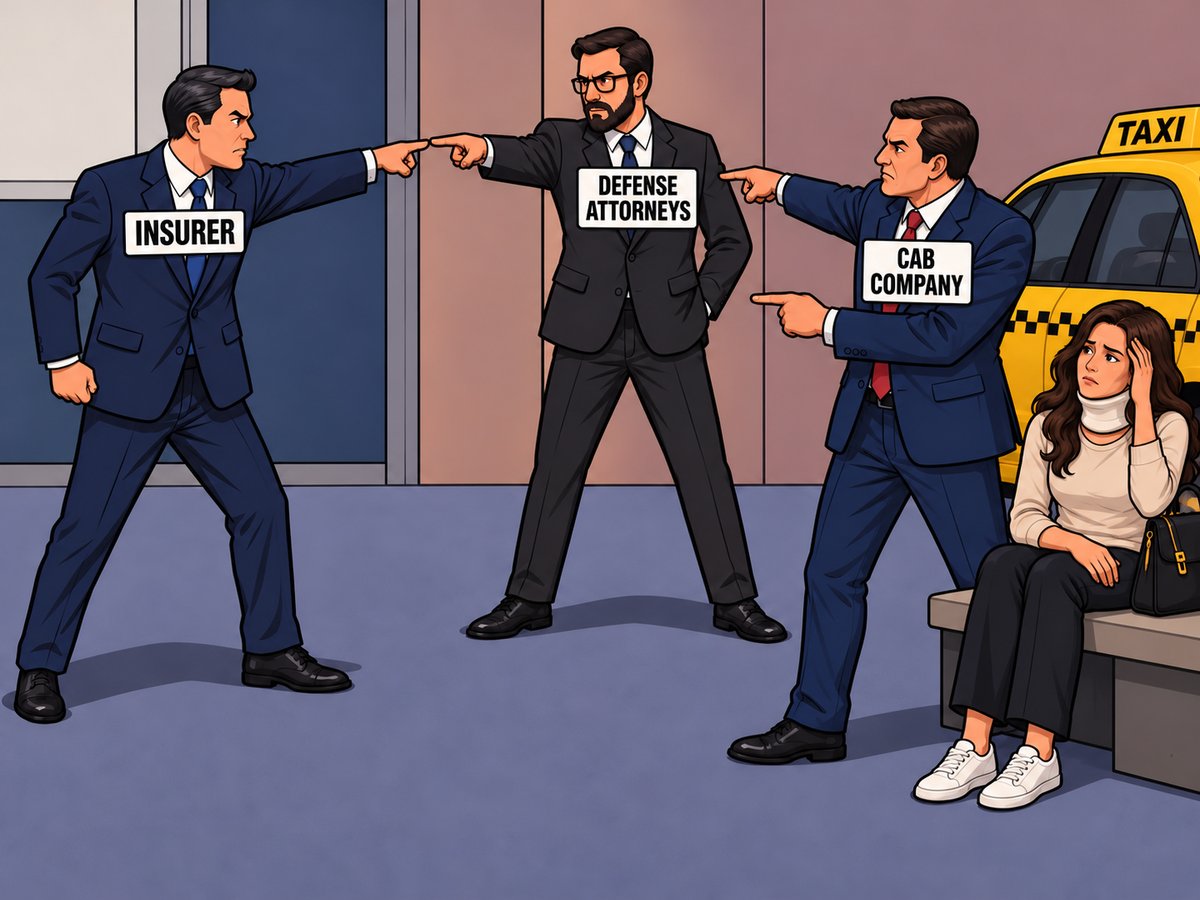
The blame game
In December 2024, the insurer sued the law firm it had hired, claiming malpractice and seeking the entire judgment as damages. Its complaint says the lawyers never warned it that Proposition 51 could leave Desoto owing nearly all the economic damages. Had they warned it, the insurer says, it would have settled within the policy limits.
Desoto, in turn, sued the insurer for breach of contract, insurance bad faith and concealment.
The court signals that an insurer may have a duty to disclose a failing defense
Magistrate Judge Laurel Beeler ruled on the insurer’s two motions in Desoto Cab Co. v. Texas Insurance Co., in an amended order issued October 2, 2026. It’s an early ruling that binds no other court, but it’s worth knowing.
She refused to throw out the concealment claim. She relied on case law and California Insurance Code section 332. That statute requires each party to an insurance contract to share, in good faith, material facts it knows that the other can’t find out on its own.
The court wrote that an insurer that “selects and controls its insured’s defense, holding the settlement power” must disclose “its knowledge that the defense is failing while the insured can defend itself.” That covers the law firm’s known mistakes while they can still be fixed, and the insurer’s own read of the exposure at the time.
Why refusing to settle within policy limits can cost an insurer the whole judgment
Under long-settled California law, an insurer that unreasonably turns down a reasonable offer to settle within policy limits can owe the entire judgment, even the excess above the limits. That is the heart of a bad-faith failure-to-settle claim.
None of Desoto’s allegations has been proven, and the case is still pending.
What to do if your insurer picks your lawyer
If you’re sued and your insurer picks your lawyer, stay involved. You can:
- Ask the insurer and your defense lawyer for written evaluations of liability and damages.
- Ask to hear about every settlement offer, especially any within your policy limits.
- Consider consulting your own counsel if the claim could exceed your limits.
- Ask the insurer, in writing, to accept any reasonable offer to settle within policy limits.
- If others share the blame, ask how joint and several liability could leave you paying their share.
- If your insurer is defending under a reservation of rights, ask whether you are entitled to Cumis counsel, a lawyer you choose at the insurer’s expense.
If you’ve been sued and your insurer is controlling the defense, contact me to talk through your exposure.
Frequently asked questions
Can an insurance company refuse to settle within policy limits?
It can, but it takes a risk. In California, an insurer that unreasonably rejects a reasonable offer to settle within policy limits can be liable for the entire judgment that follows, including any amount above the limits.
What is an excess judgment?
An excess judgment is a judgment larger than the defendant’s insurance limits. Desoto’s was about $10.86 million on a $1 million policy. When an insurer’s unreasonable refusal to settle causes an excess judgment, the insurer can be on the hook for the amount above the policy limits.
How does Proposition 51 affect damages in California?
Under Proposition 51, economic damages, such as medical bills and lost earnings, remain joint and several, so one defendant can be made to pay all of them.
Does my insurer have to tell me if my defense is failing?
It may. In the Desoto case, the court said an insurer that picks and controls the defense, and controls settlement, must disclose that the defense is failing while the policyholder can still protect itself. The ruling is early and binds no other court.
Considerations for attorneys: pushing to settle within policy limits
If you defend policyholders for an insurer, or advise the insurers who hire you, keep the client informed about its exposure at every stage, in writing. That means the worst case, not just the likely one, and what happens if a reasonable offer goes unanswered.
Insurers are often slow to settle. Many want to test the case first, wait to see how bad the exposure really is, or hold out hoping to pay less. Some delay. Some deny.
But when a reasonable offer to settle within policy limits is on the table, encourage the insurer to take it. Nothing is guaranteed at trial. A jury can agree with you on fault and still return a verdict far above the limits. And Proposition 51 can make a defendant who is barely at fault answer for every dollar of economic damages.
That’s the lesson of Desoto. The insurer now says its own lawyers never warned it about Proposition 51, and that it would have settled if they had. Whether or not that’s true, the warning costs nothing to give.
Explain the exposure early and often, and push for settlement when it’s reasonable. Leaving everything to trial is how a 3 percent case becomes a $10.86 million judgment. If you have a case with exposure above the limits, I’m glad to talk it through.
This post is general information about California insurance law, not legal advice. Every claim turns on its own facts and policy language.
